Flying Warrior: City Legends
Galaxy Legend Game StudioAction
4.624.00 Reviews
- Version
- 1.1.1
- Installs
- 10.00M
- Age Rating
- Everyone
Screenshots
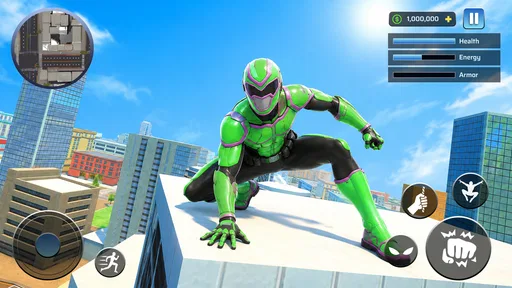
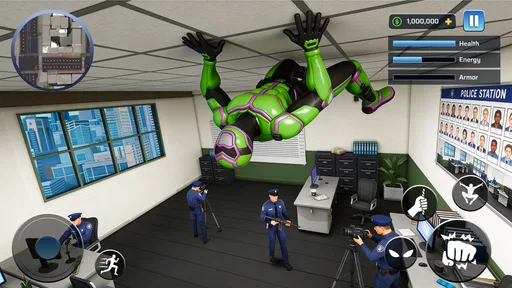
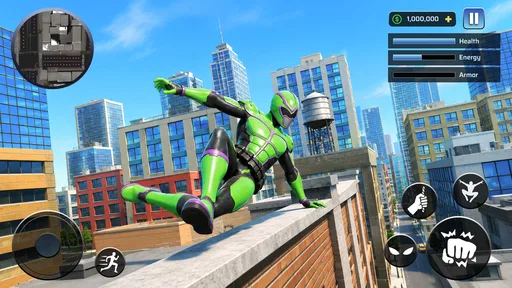
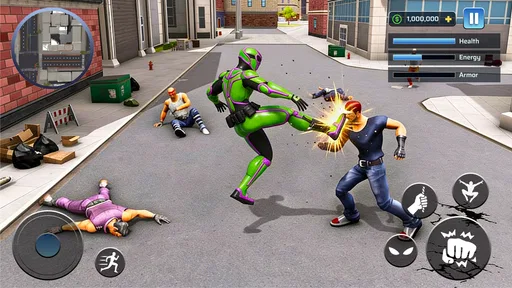
Our Review of Flying Warrior: City Legends
 Analysis by Appyee
Flying Warrior: City Legends is an action game built around a simple fantasy: take to the sky, move through a city, and deal with trouble from above. After spending time with it, I found its appeal comes from the directness of that idea. It does not ask me to learn a complicated strategy system before I can enjoy myself. I can pick it up, start moving, and immediately feel like a flying hero. That makes it easy to recommend for short bursts of play, although players looking for a deep combat simulation or a large role-playing experience may find its streamlined approach limiting.
Galaxy Legend Game Studio presents the game as a flying super-warrior adventure, and that description is a fair guide to the experience. The focus is on aerial movement, action encounters, and the gradual excitement of opening up more weapons. The city setting gives the missions a recognizable backdrop, while the superhero premise supplies the motivation to keep going. My overall impression is that this is best understood as a quick, accessible action game rather than a demanding long-form campaign.
How the city-fighting experience works
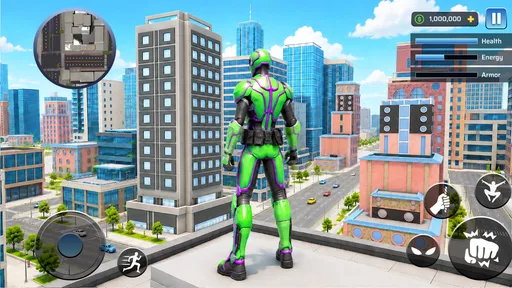
I found that the key to enjoying the city-fighting loop is to make each approach deliberate rather than treating flight as a shortcut between encounters. In this section, I look at how movement, combat, and weapon unlocks shape the experience, and why a little patience can make the action easier to read. That also helps clarify where this focused design stands beside other mobile action games.
A straightforward premise that gets moving quickly
The strongest part of Flying Warrior: City Legends is how quickly it communicates what I am supposed to do. I am not buried under lengthy explanations or a dense collection of menus before the action begins. The central loop is easy to grasp: fly through the urban environment, confront threats, and use the tools available to become more effective. That clarity matters on a phone, where I may only have a few minutes available.
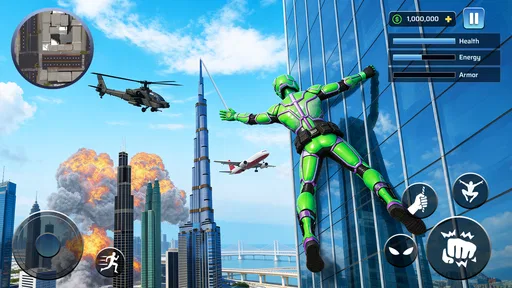
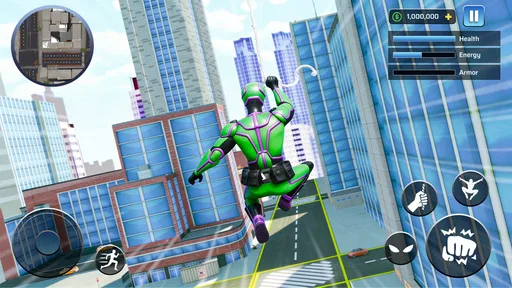
I also like that the flying concept is not merely decorative. Being above the streets changes how I read the environment. Instead of moving along a flat path, I am encouraged to think about height, approach, and the direction of the next encounter. Even when the underlying objective is simple, the feeling of crossing the city as a powered character gives ordinary movement more personality than a standard ground-based brawler.
The game’s free price makes this kind of immediate accessibility especially useful. Someone curious about superhero action can try it without treating the download as a major commitment. It is also rated for Everyone, so it is positioned as a broadly approachable choice rather than an experience aimed at a narrow adult audience. I would still suggest that parents look at the game themselves before handing it to a child, since age labels are helpful starting points but do not replace personal judgement.
Why movement is more important than spectacle
In my experience, the flying controls are the part that determines whether the game feels enjoyable or merely ordinary. The city is more interesting when I use the aerial space deliberately instead of treating flight as a faster way to reach the next fight. Approaching from a better angle can make the action feel more controlled, while rushing directly into every situation can make encounters feel less satisfying.
One practical habit helped me enjoy the game more: I stopped trying to move and attack as aggressively as possible at the same time. I first positioned the character, then concentrated on the immediate threat. That small change made the action easier to read and reduced the sense that I was simply tapping through a sequence. Players who find the opening sessions hectic may benefit from treating movement as a separate decision rather than constant background input.
This is also where the game differs from many conventional action alternatives. A typical side-scrolling fighter gives me a clear horizontal lane and makes timing the main concern. Flying Warrior: City Legends adds vertical freedom to the fantasy, even though that freedom also creates a greater need for spatial awareness. It is not automatically more complex, but it gives the player a different kind of control to learn.
Weapons provide a reason to continue
Unlockable weapons are an important part of the progression. They give the encounters a purpose beyond simply reaching the next section of the city. I found that the promise of gaining another tool encouraged me to continue after a session that was enjoyable but not especially demanding. The weapon system works best as a light progression layer: it supports the flying-warrior fantasy without turning the game into a full equipment-management exercise.
A useful way to approach the unlocks is to think of them as changes in rhythm rather than automatic solutions. A new weapon may make a situation feel more comfortable, but it does not remove the need to pay attention to movement and positioning. Players who expect every upgrade to transform the difficulty may be disappointed. The better expectation is that each improvement helps keep the action fresh and gives repeated play a clearer sense of direction.
I would also avoid rushing through every available upgrade simply because it appears. When a game offers new tools, it is tempting to treat progression as a checklist. I had more fun when I used the current weapon for a while and noticed which parts of the combat felt awkward before deciding what kind of improvement I wanted next. That approach makes the progression feel more personal, even within a relatively accessible action format.
Where the game feels less substantial
The same simplicity that makes the game approachable can also make it feel lightweight. Flying Warrior: City Legends does not strike me as a replacement for a deep action role-playing game, a competitive fighter, or a large open-world superhero title. Its appeal is narrower and more focused. If I want elaborate character builds, a complicated story, or a broad range of systems to master, I would choose a different type of game.
The aerial setting creates expectations that the city will be a highly interactive playground. In practice, I found it more useful to view the environment as the stage for the action rather than as a world I can freely treat like a sandbox. That distinction is important before downloading. The game delivers the fantasy of flying through an urban setting, but players searching for extensive exploration may want something designed specifically around discovery and open-ended travel.
Another limitation is the potential for repetition. The core loop is clear, but clarity can become predictability when I play for a long stretch without a break. I think the game is better suited to short sessions than to an extended evening of continuous play. A practical routine is to stop after a few encounters or after unlocking a meaningful improvement, then return later. That keeps the movement and combat from blending into a single repetitive sequence.
This is not a criticism of the game’s basic direction so much as a warning about expectations. A compact action game does not need dozens of systems to be worthwhile. It does, however, need to be judged by the kind of entertainment it is offering. Here, the quick superhero fantasy is the main attraction, and the experience is strongest when I accept that focus instead of asking it to behave like a much larger production.
Who will get the most from it
I would recommend this game to players who enjoy action that can be understood quickly and revisited without a long preparation period. It works particularly well for someone who likes the idea of a flying hero but does not want to commit to a complicated campaign. The city setting, direct objectives, and weapon progression make it suitable for casual play, especially when I want a little movement and combat rather than a story-heavy experience.
It is also a reasonable choice for younger or less experienced players who may be put off by elaborate controls. The Everyone rating and free access lower the barrier to trying it, while the superhero premise gives the game an immediate identity. I would describe it as friendly for newcomers, though not necessarily deep enough to satisfy players who have already spent a lot of time with demanding action games.
For a realistic everyday use case, imagine having a short wait before an appointment or a few spare minutes during a commute. This is the kind of situation in which the game makes sense: I can launch it, enjoy a compact burst of aerial action, and stop without needing to remember a complicated plot or rebuild a strategy from scratch. The weapon unlocks also give those brief sessions a small continuing goal.
On the other hand, I would skip it if my priority were competitive multiplayer, a detailed superhero narrative, or a carefully balanced combat challenge. I would also look elsewhere if I wanted a game that rewards long planning sessions and extensive customization. Flying Warrior: City Legends is more comfortable as an accessible action diversion than as a definitive superhero game.
Practical details before downloading
The game is free and has passed the million-install mark, which suggests that its straightforward concept has reached a sizeable mobile audience. Its average rating is 4.4 from around 1.7 thousand ratings, a positive signal that fits my impression of an approachable and enjoyable experience. I would not treat that rating as proof that every player will enjoy the same aspects, but it does indicate that the game’s basic formula connects with many people.
The current version is 1.0.7, and the listed minimum requirement is Android 7.0. That makes it relevant to many users who are not carrying a recent phone, although actual smoothness can still vary with hardware and background activity. Because the game relies on movement and action timing, a device that handles it comfortably will make a noticeable difference. If controls feel delayed or crowded, the problem may be less about the concept and more about the way the game fits a particular screen and device.
The release date is May 7, 2026, so I would approach the game as a relatively new entry rather than an established series with years of accumulated content. That can be appealing if I want something fresh, but it also means my expectations should remain focused on what is available now. Galaxy Legend Game Studio has chosen a clear starting point: flying, fighting, and opening weapons. The value comes from how well that compact structure fits my play habits.
One small but important decision is whether to play in short bursts or attempt a long session. I strongly prefer the first approach. Short sessions keep the city-fighting loop energetic and make each weapon improvement feel useful. Longer sessions expose the limited variety more quickly. This is a trade-off rather than a flaw that affects everyone equally: casual players may see the structure as convenient, while dedicated action players may want more layers.
How it compares with familiar alternatives
Compared with a traditional beat ’em up, this game’s identity comes from vertical movement and the fantasy of controlling a powered flyer. A beat ’em up may offer more emphasis on close-range timing, lane management, and enemy patterns, whereas this experience asks me to pay more attention to aerial approach and the city space around the character. If I want the feeling of being above the streets, the flying design gives this game a clear advantage over a standard ground-only alternative.
Compared with a superhero role-playing game, however, it is much less concerned with character development and long-term planning. Those larger games often appeal through dialogue, exploration, extensive abilities, and a more elaborate sense of progression. Flying Warrior: City Legends is easier to enter, but it cannot offer the same depth without becoming a different kind of product. I would choose it for immediacy and choose the role-playing alternative for a longer, more involved journey.
It also occupies a different space from endless runners. Both can fit short mobile sessions, but the flying-warrior game gives me more of an action objective than a pure distance challenge. I am not simply trying to survive as long as possible; I am engaging with threats and working toward weapon unlocks. Players who like runners but want a stronger sense of confrontation may find that distinction appealing.
Small habits that improve the experience
My first tip is to learn the shape of the city before chasing speed. A quick flight through an area can be exciting, but familiarity makes later encounters feel more intentional. I paid closer attention to where I was approaching from and whether I was entering a fight with enough room to react. That awareness is more useful than blindly repeating the same movement pattern.
My second tip is to treat weapon progression as a reason to experiment, not only as a power ladder. If a new tool changes the way I handle an encounter, I can use it to vary my approach instead of returning to the same attack routine. This helps with the game’s repetition issue because it turns an unlock into a small change in decision-making.
My third tip is to use the game as a focused break rather than an all-day destination. The action is at its best when I am alert to the movement and enjoying the superhero premise. Once I begin playing automatically, the strengths become less visible. Stopping at that point and returning later preserves the freshness that the compact design offers.
A final trade-off is worth keeping in mind: accessibility and depth pull in opposite directions here. The uncomplicated structure means I can understand the game quickly, but it also means there is less for me to analyze after the initial novelty fades. That balance is not a problem for every audience. It is exactly why I would recommend it to a casual action player and hesitate to recommend it to someone seeking a demanding mastery game.
My verdict after playing
Flying Warrior: City Legends succeeds because it keeps its promise focused. It gives me the sensation of controlling a flying protector, places that character over a city, and adds weapons to make continued play feel worthwhile. The best evidence in its favor is the way those elements work together without demanding a long tutorial or a large time investment. I can understand the appeal within a short session, and I can return later without feeling lost.
Its meaningful weakness is equally clear: the compact action loop may not provide enough variety for players who want a deep or expansive superhero adventure. The city should be approached as an action backdrop rather than a fully open world, and the game is more satisfying in measured sessions than in marathon play. Knowing that before downloading prevents the most common disappointment.
Overall, I recommend it to anyone who wants a free, approachable mobile action game with a flying-hero theme and light weapon progression. I would especially point it toward newcomers, casual players, and people who enjoy short bursts of superhero action. I would not present it as a substitute for a full role-playing game or a serious combat challenge. Its real strength is focused, easy-to-start aerial action, and when I play it on those terms, it delivers an enjoyable and uncomplicated way to spend a few minutes.
Privacy and Permissions
See what permissions an app requests and how it handles your data.
- Wi-Fi connection information
- view Wi-Fi connections
- Other
- view network connections, full network access, control vibration, prevent device from sleeping, Google Play license check
Verdict
Strengths of Flying Warrior: City Legends
- Fast-paced combat makes short play sessions feel rewarding.
- Distinct warrior abilities add variety to battles.
- Urban levels offer more visual variety than typical fantasy settings.
- Simple controls make the game easy to pick up on mobile.
- Frequent enemy encounters keep exploration active and engaging.
Limitations of Flying Warrior: City Legends
- Some missions may feel repetitive after extended play.
- Difficulty can rise sharply in later stages.
- Upgrade resources may take time to collect without extra play.
- The interface can feel crowded on smaller phone screens.
- An internet connection may be needed for certain features.
Similar Picks in This Category
View All
Temple Run 2: Endless Escape
Imangi Studios4.1

PUBG MOBILE
Level Infinite4.3

Free Fire: 9th Anniversary
GARENA INTERNATIONAL I4.4

Talking Tom: Hero Dash Run
Outfit7 Limited4.3

slither.io
Lowtech Studios3.9

Sniper 3D:Gun Shooting Games
Wildlife Studios4.6
Frequently Asked Questions
What is Flying Warrior: City Legends about?
Flying Warrior: City Legends is an action-oriented mobile game centered on a powerful hero who moves through a modern city while battling enemies and completing missions. The game combines flying or aerial movement with combat, exploration, and character progression. Before downloading, players should expect a fast-paced experience focused more on action and adventure than on realistic simulation or deep role-playing mechanics.
Can Flying Warrior: City Legends be played offline?
The availability of offline play may depend on the version installed and the device being used. Core gameplay can often be accessible without a constant connection, but features such as advertisements, cloud saves, updates, online rewards, or certain missions may require internet access. It is best to launch the game once while connected and review its in-game requirements before relying on it during travel or without mobile data.
Is Flying Warrior: City Legends free to download and play?
Flying Warrior: City Legends can generally be downloaded at no initial cost, allowing users to try the main gameplay without purchasing the app. However, free mobile games may include advertising, optional in-app purchases, or paid items that speed up progress and unlock additional content. Parents should check purchase settings, while all players should review the store listing for the latest pricing and monetization details.
What devices are compatible with Flying Warrior: City Legends?
Compatibility depends on the operating system, hardware, and version supported by the developer. The game may run on many recent Android or iOS devices, but older phones and tablets could experience slower loading, reduced visual quality, overheating, or crashes. Before installing, check the official store page for the required operating-system version and available storage, and close other demanding apps if performance is limited.
Is Flying Warrior: City Legends suitable for children?
The game may be suitable for players who enjoy superhero-style action, but parents should check the age rating and content description in their region before installation. Combat, cartoon violence, advertisements, and optional purchases may be present. Because ratings and features can change between updates, families should also use parental controls, restrict in-app purchases, and review whether online services or external links are included.
Play our best games!


